Abstract
The rapid advancement of cultural digitalization has positioned artificial intelligence as a key driver of change in cultural heritage conservation, promoting a shift from traditional physical preservation to more digital and intelligent approaches. As primary institutions for regional heritage conservation and public cultural services, local museums face multiple challenges in this process, including limited technical capacity for artifact preservation, insufficient exploration of cultural value, weak public engagement, and fragmented resource integration. To address these issues, a systematic review of the literature is conducted to develop a three-dimensional analytical framework encompassing physical preservation, cultural information mining, and public value dissemination. Taking Baoshan Museum as a case study, case-based analysis and practical synthesis are employed to examine its current constraints and emerging development needs in cultural heritage conservation. Building upon this analysis, the study proposes a set of AI-enabled technological applications, including high-precision digital acquisition, preventive intelligent monitoring, the construction of cultural heritage knowledge graphs, and immersive exhibition technologies. Furthermore, it establishes an integrated practical framework that combines preventive conservation, data-driven research, and intelligent communication. Finally, the study advances targeted optimization strategies from three aspects: the standardization of data resources, the development of interdisciplinary talent and institutional support mechanisms, and the promotion of social sharing. These efforts aim to provide a practical reference for enhancing the capacity of local museums in cultural heritage preservation and utilization.
|
Published in
|
Humanities and Social Sciences (Volume 14, Issue 2)
|
|
DOI
|
10.11648/j.hss.20261402.25
|
|
Page(s)
|
186-193 |
|
Creative Commons
|

This is an Open Access article, distributed under the terms of the Creative Commons Attribution 4.0 International License (http://creativecommons.org/licenses/by/4.0/), which permits unrestricted use, distribution and reproduction in any medium or format, provided the original work is properly cited.
|
|
Copyright
|
Copyright © The Author(s), 2026. Published by Science Publishing Group
|
Keywords
Artificial Intelligence (AI), Local Museums, Cultural Heritage Conservation, Cultural Relics Digitization, Smart Museums
1. Introduction
In the context of accelerating digital and intelligent transformation, artificial intelligence (AI) is increasingly reshaping the technological approaches and operational models of cultural heritage conservation. With its capacity for large-scale data processing, intelligent analysis, and scenario reconstruction, AI enables more efficient and integrated heritage management. In recent years, well-implemented national digital heritage projects, including the digital initiative of the Palace Museum, Digital Dunhuang launched by Dunhuang Academy, and Cloud Yungang: Yungang Academic Literature Database of Yungang Academy, have enabled cultural heritage to transcend physical museum boundaries, migrate to cloud platforms and the internet, and achieve digital permanent preservation of Chinese cultural treasures
| [1] | Zhang Yinglan. Promoting the Protection and Utilization of Historical and Cultural Heritage through Digital Empowerment. Contemporary Power Culture. 2025, 12, 58-59. |
[1]
. However, compared with large national museums, prefecture-level museums in China remain constrained in their digital transformation processes. These institutions commonly face limited financial investment, challenges in technological implementation, and shortages of interdisciplinary expertise. As a result, their transition toward intelligent and data-driven systems has been relatively slow, restricting their ability to fully realize their roles in heritage conservation and public cultural service provision.
As a representative second-class national museum in western Yunnan, Baoshan Museum houses collections associated with the Ailao bronze culture, relics of the Western Yunnan Anti-Japanese War, and artifacts reflecting border ethnic cultures. These collections embody significant historical narratives of ethnic interaction in China’s southwestern frontier and modern regional development, and are characterized by strong regional specificity and cultural distinctiveness. Against this background, this study adopts Baoshan Museum as a case study to examine how artificial intelligence can be effectively integrated into cultural heritage conservation, research, interpretation, and public engagement. By situating the analysis within the museum’s collection characteristics and institutional context, the study aims to identify practical pathways for AI application in resource-constrained settings. This research seeks to contribute to the broader discourse on digital heritage by providing an empirically grounded framework for understanding how local museums can leverage emerging technologies to enhance both heritage preservation and public accessibility, particularly in less-developed regions.
2. A Three-dimensional Theoretical Framework for AI-enabled Cultural Heritage Conservation
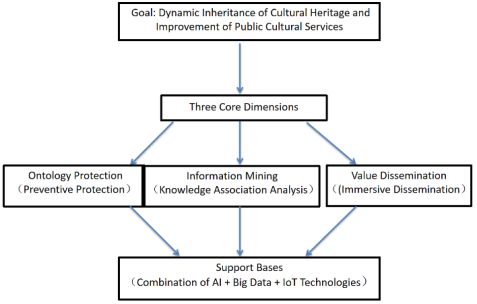
Figure 1. AI-Enabled Three-Dimensional Theoretical Framework for cultural heritage conservation.
Cultural heritage conservation is a long-term endeavor characterized by high professionalism and systematicity, with its underlying concepts and practical models evolving continuously alongside technological advancements and shifting social demands. Traditional conservation efforts center on the physical restoration and preservation of cultural relics, focusing primarily on maintaining material integrity and delivering basic exhibitions. In the digital and intelligent era, however, the scope of conservation has expanded significantly: it not only encompasses the safety maintenance of cultural relics themselves but also emphasizes in-depth information analysis, systematic value interpretation, and effective public communication
| [2] | Ding Rui, Zhang Yuanyi, Liu Xiaohuan. Analysis of Innovative Paths and Transformation Challenges in the Digital Protection of Cultural Heritage. China Cultural Heritage, 2025, 6, 67-73. |
[2]
. Building on this understanding, this study systematically examines the application of artificial intelligence technology in cultural heritage conservation from three perspectives: conservation of cultural relics themselves, the mining of cultural information, and the dissemination of public values. Specifically, physical conservation emphasizes the safety of cultural relic entities and the construction of digital twins; information mining focuses on the structured expression of cultural information and the reconstruction of knowledge systems; and value dissemination concerns the public interpretation and social sharing of cultural heritage. These three perspectives are not only mutually independent but also form a synergistic and interactive relationship within the digital technology ecosystem, collectively constituting the analytical framework for AI-enabled cultural heritage conservation.
2.1. Physical Protection Dimension: From Reactive Restoration to Preventive Conservation
The safety of cultural relic entities serves as the cornerstone of cultural heritage conservation. Affected by multiple factors, including environmental fluctuations, material aging, and human interference, collected cultural relics generally face risks of material deterioration and disease progression. The traditional conservation model relies heavily on post-facto restoration, which depends on manual inspections and empirical judgments. This approach lacks continuous quantitative monitoring of the preservation environment and struggles to predict potential disease risks proactively. With the integrated application of digital technologies and intelligent methodologies, the protection of movable cultural relics has shifted from empirical emergency restoration to a preventive protection system that integrates multi-source monitoring and intelligent algorithms. On the basis of systematically sorting out the development course of cultural heritage conservation risk management in China, some studies have pointed out that through dynamic monitoring of environmental parameters, intelligent disease identification, and data modeling, this system meets the requirements for refined and scientific management
| [3] | Li Baiwei, Zhu Jinyao, Li Yuan. Review of the Development of Cultural Relic Protection Risk Management in China. Journal of Beijing University of Chemical Technology (Natural Science). 2025, 52(5), 42-52. |
[3].
The collaborative application of high-precision Three-Dimensional (3D) information collection, non-destructive testing and analysis, disease identification, and dynamic environmental monitoring enables the retention of information and recording of status with minimal physical intervention. This not only provides reliable data support for restoration and exhibition but also effectively reduces the potential risk of damage to cultural relics during retrieval, transportation, and display.
2.2. Information Mining Dimension: Deepening from Feature Description to Correlation Analysis
Cultural heritage is a witness to the development of human history. It can reproduce the historical features of yesterday, ancient dynasties and even remote antiquity, serving as a living fossil of specific historical periods. It embodies distinctive creative achievements and unique humanistic values
. The core of cultural heritage lies not only in its material form but also in the diverse historical, social, cultural, and technological information. Traditional cultural relic research predominantly relies on manual interpretation, literature comparison, and empirical reasoning, which present significant limitations in terms of efficiency, research scope, information relevance, and large-scale data processing. These constraints hinder the in-depth exploration of the cultural connotations and historical logic underlying cultural relics. By leveraging knowledge graphs, multi-source data fusion, and correlation reasoning, AI converts unstructured archives and documents into structured knowledge systems. This enables the global correlation of cultural relics, time and space, characters, and events, thereby promoting the upgrading of research from experience-driven to data-driven paradigms and from fragmented interpretation to systematic knowledge production
| [5] | Liu Min, Zhang Jian. The Path of Cultural Relic Information Integration in local museums from the Perspective of Knowledge Graph Construction—Taking the Cultural Relics of the Western Yunnan Campaign as an Example. Journal of Yunnan Minzu University (Philosophy and Social Sciences Edition). 2023, 40(3), 112-119. |
[5]
. The resulting data-driven research model provides a novel methodological foundation for the in-depth interpretation of cultural heritage values.
2.3. Value Communication Dimension: Expansion from Static Exhibition to Contextual Experience
The vitality of cultural heritage resides in its contemporary sharing and intergenerational inheritance. As critical tools for public cultural services, local museums assume the function of transforming cultural heritage values and facilitating their social communication. The narrative of cultural heritage under traditional protection modes is one-way and closed, relying on static presentation through physical exhibitions and authoritative discourse of expert interpretation
| [6] | Ga Lasen, Pei Jiajie. Risk Governance for Cultural Heritage Protection in the Digital Intelligent Era. Cultural Heritage, 2025 (3): 60-67. |
[6]
. Traditional exhibitions primarily rely on physical displays and graphic interpretations, which are constrained by physical space and linear narrative structures. This results in relatively limited public participation and makes it challenging to achieve cognitive construction and emotional resonance. For the audience, it is more important to connect distant historical cultural relics with their own emotions and arouse people’s imagination of the authenticity of the past
| [7] | Newell J. Old Objects, New Media: Historical Collections, Digitization and Affect. Journal of Material Culture. 2012, 17(3): 287-306. |
[7]
. AI-driven technologies, such as VR (Virtual Reality), AR (Augmented Reality), MR (Mixed Reality), AIGC (Artificial Intelligence Generated Content), and intelligent interaction, enable the construction of immersive, experiential, and co-creative communication scenarios, realizing the seamless integration of online and offline experiences
| [8] | Chen Gang, Li Juan. Immersive Experience and Intelligent Communication: The Activation Path of Cultural Heritage in Local Museums in the AI Era. Southeast Culture. 2022, 6, 178-185. |
[8]
. This intelligent communication approach not only expands the reach of cultural heritage dissemination but also enhances public engagement and experience, transforming cultural heritage from collected resources into shared living cultural wealth.
3. Practical Dilemmas and Inherent Needs of Cultural Heritage Conservation in Baoshan Museum
Combined with the collection structure and development status of Baoshan Museum, and benchmarked against the framework of the conservation of cultural relics, the mining of cultural information, and the dissemination of public values, this study analyzes the museum’s practical dilemmas from three aspects: the basic conditions of cultural relic protection, the capacity for cultural information integration, and the level of public cultural services. Furthermore, it clarifies the inherent needs for AI technology intervention, providing targeted insights for the development of subsequent practical paths.
3.1. Limited Conservation Technologies and Underdeveloped Preventive Systems
Baoshan Museum currently houses over 10,000 cultural relics, including 9 first-class cultural relics, 11 second-class cultural relics, and 206 third-class cultural relics. The collection covers a diverse range of types, such as bronzes, paper documents, wooden cultural relics, and ceramics. Among these, some cultural relics are of considerable age and feature fragile materials, imposing high requirements on the preservation environment and protection technologies. In terms of the physical preservation of cultural relics, the museum faces three challenges: First, the refined level of monitoring for the cultural relic preservation environment is insufficient. The existing preservation conditions primarily rely on traditional management models, making it difficult to conduct continuous monitoring and data-driven management of key environmental factors, such as temperature, humidity, light intensity, and microbial activity. Consequently, potential risks cannot be identified in a timely manner, leading to the gradual accumulation of issues such as bronze corrosion, paper embrittlement, and the aging of organic cultural relics. Second, the scope of digital coverage is limited. Since launching the digital protection and utilization of cultural relics in 2022, the museum has completed data collection for 153 cultural relics. However, compared to the total collection size, the scale of digital achievements remains modest, and a systematic protection system has not yet been established. Some digital outputs still remain at the level of basic text recording and conventional image collection, lacking high-precision 3D models, full-element texture information, and standardized metadata. This makes it challenging to establish long-term, stable digital archives and effectively support subsequent exhibition, communication, scientific research, and activation. Third, the utilization of cultural relics still primarily relies on physical contact. Academic research, exhibitions, and public education activities predominantly depend on physical cultural relics, increasing the potential risk of damage during transportation and display. Additionally, relevant data are stored in a fragmented manner with heterogeneous formats, failing to provide stable data support for intelligent monitoring and scientific restoration.
3.2. Insufficient Resource Integration and Underdeveloped Knowledge Production Capacity
The cultural relics collected by Baoshan Museum record important information about ethnic integration, the history of the War of Resistance against Japanese Aggression, and border social development in western Yunnan, boasting prominent academic value. However, in terms of cultural information mining and academic research, relevant resources have not been fully integrated, and their potential value remains largely untapped. Despite the museum’s large and diverse collection, related archives, archaeological reports, historical documents, and research findings are mostly stored in unstructured and fragmented forms. The temporal and spatial correlations between cultural relics, as well as between cultural relics and historical events, have not been systematically organized, making it difficult to form a complete cultural information network. Currently, research methods still rely heavily on manual retrieval and empirical analysis, resulting in relatively low efficiency and hindering large-scale data correlation analysis. For instance, research on cultural relics of the Western Yunnan Campaign involves multiple fields, including military history, social history, and regional history, but lacks the support of a systematic data platform, making it challenging to construct a comprehensive historical narrative structure. Furthermore, the museum’s informatization construction is still in its initial stages, and a sound intelligent collection management and knowledge mining system has not been established. As a result, existing digital achievements are difficult to transform into computable and analyzable structured knowledge resources, which restricts the depth and breadth of cultural relic research.
3.3. Monotonous Exhibition Methods and Inadequate Public Cultural Service Capacity
Against the backdrop of rapid digital technology development, public demand for cultural heritage communication has shifted from traditional information acquisition to immersive experience and interactive participation. While Baoshan Museum relies primarily on traditional exhibition models, which can no longer fully meet the increasingly diversified cultural needs of the public. The adoption of traditional exhibition methods featuring physical displays supplemented by graphic descriptions results in limited narrative layers and a lack of interactive experience sessions. Consequently, the public struggles to gain an in-depth understanding of the historical background and cultural connotations behind cultural relics during visits, making it difficult to form emotional resonance. In addition, due to constraints such as geographical location, opening hours, and physical space capacity, the radiation scope of public cultural services at Baoshan Museum is relatively limited, and people in remote areas or special groups still have insufficient access to cultural resources. Although we have launched online services such as “Virtual Visit to Baoshan Museum”, the overall content remains relatively simple, the types of digital products are relatively single, and a communication system featuring in-depth integration of online and offline services has not yet been formed.
4. Practical Technical Paths for AI-enabled Cultural Heritage Conservation in Baoshan Museum
Based on the aforementioned theoretical framework and analysis of practical dilemmas, the introduction of AI technology should not be a mere superficial addition at the tool level. Instead, it requires systematic path reconstruction to promote the transformation of cultural heritage conservation from experience-driven to data-driven, and from scattered individual applications to systematic operation. Specifically, a technically feasible path with inherent logical consistency can be constructed around three areas: physical protection, information analysis, and value communication.
4.1. Construction of a Preventive Protection System Integrating Intelligent Monitoring and Digital Twins
Considering its collection scale, the material characteristics of its artifacts, and the current level of digital development, Baoshan Museum is recommended to adopt digital twin technology as a core approach. Digital twin technology transforms physical objects into high-fidelity virtual models, enabling the simulation of real-world conditions and supporting extended analytical functions beyond the limitations of physical entities
| [9] | Zhang Xiaomin, Zhang Lemin, Ullah Ako. Digital Twin Technology and Wisdom Museum from the Perspective of Artificial Intelligence. In International Conference on Multi-modal Information Analytics. Cham, Springer International Publishing, 2022, 674-682. |
[9]
. Building on this foundation, the integration of multi-source sensing and intelligent analytical tools can facilitate the establishment of a dynamically responsive preventive conservation system, addressing existing challenges in physical preservation.
The implementation of such a system can be structured through three measures. First, an AI-based intelligent disease identification and early warning system can be established. This system would allow automatic detection, quantitative assessment, and trend prediction of typical deterioration phenomena, including bronze corrosion, paper embrittlement, and wooden artifact decay. Internet of Things (IoT) enabled environmental monitoring devices can collect real-time data on key preservation indicators, such as temperature, humidity, light intensity, and air composition, which can then be analyzed using AI algorithms to generate dynamic risk assessments and early warnings. This approach overcomes the limitations of conventional manual inspections, enhances refined environmental management, and mitigates the risk of deterioration progression
| [3] | Li Baiwei, Zhu Jinyao, Li Yuan. Review of the Development of Cultural Relic Protection Risk Management in China. Journal of Beijing University of Chemical Technology (Natural Science). 2025, 52(5), 42-52. |
[3]
.
Second, digital preservation outcomes should be upgraded, and a standardized digital archive system constructed. Cultural relics can be digitized in a phased and categorized manner according to their grade, material properties, and preservation status. Priority should be given to first- and second-class precious relics, as well as fragile or vulnerable items, to achieve high-fidelity reconstruction of geometric structures, surface textures, and material properties. Furthermore, the integration of Unmanned Aerial Vehicle oblique photography, Light Detection And Ranging (LiDAR), and 3D laser scanning technologies can support comprehensive digital documentation of important immovable heritage. Existing digital assets should be consolidated, data formats standardized, and a systematic digital archive developed to provide robust support for intelligent monitoring, scientific restoration, digital exhibitions, and academic research.
Third, the utilization of cultural relics can be optimized, and the risk of physical handling minimized, through the enhanced digital archive system. A digital exhibition and research platform can be established to provide access for academic study and public display via digital images, 3D models, and other virtual formats. This approach reduces the potential for irreversible damage associated with the extraction and transportation of physical artifacts, thereby balancing the dual objectives of preservation and utilization.
4.2. Establishment of a Knowledge Integration System Integrating Knowledge Graphs and Multi-source Data Fusion
To address the challenges of insufficient resource integration and limited knowledge production capacity, Baoshan Museum is recommended to systematically integrate multi-source cultural relic information. Leveraging its distinctive collections, such as those related to the Western Yunnan Campaign and the Ailao Bronze Culture, the museum can construct a cultural relic knowledge graph to facilitate structured analysis and retrieval. Building on existing digital foundations, a data reconstruction framework can be established, in which cultural relics serve as core nodes and regional cultural contexts act as connecting links.
Through the systematic organization and standardized processing of collected archives, archaeological data, historical documents, and research outputs, a cross-type and multi-dimensional data resource system can be developed. This system emphasizes the multiple correlations between cultural relics, as well as between cultural relics and broader historical contexts, including ethnic exchanges in western Yunnan, the War of Resistance against Japanese Aggression, and regional border development patterns. By extracting cultural logic from both temporal evolution and spatial distribution perspectives, a structured correlation model can be established, encompassing elements such as artifacts, time, space, historical figures, and craftsmanship. This model transforms information from fragmented storage into an integrated and correlated resource, thereby supporting advanced knowledge mining and multi-dimensional retrieval.
Qin Xinhua has explored the construction and application of cultural heritage knowledge graphs using Shanxi Museum as a case study. He argued that unlike traditional entry-level databases, knowledge graphs emphasize semantic correlations among data, enabling the interpretation of cultural relic information within a comprehensive historical context and providing a foundation for in-depth knowledge extraction and multi-dimensional analysis
| [10] | Qin Xinhua. Knowledge Graph and Its Application in Museums: A Case Study of Shanxi Museum. Museum. 2024, 3, 105-113. |
[10]
. For instance, in research on the Western Yunnan Campaign relics, a cross-temporal and spatial relational structure can be built around the nodes “cultural relics—battles—transportation routes—regional society” to reveal inherent connections between different artifact types and expand research perspectives.
Simultaneously, the reliance on manual retrieval and empirical judgment can be mitigated through the introduction of digital analysis tools, offering systematic support for researchers
| [5] | Liu Min, Zhang Jian. The Path of Cultural Relic Information Integration in local museums from the Perspective of Knowledge Graph Construction—Taking the Cultural Relics of the Western Yunnan Campaign as an Example. Journal of Yunnan Minzu University (Philosophy and Social Sciences Edition). 2023, 40(3), 112-119. |
[5]
. In addition, the museum may accelerate the development of informatization and intelligent platforms. Given the early stage of digital infrastructure, local museums can progressively establish intelligent collection management and knowledge mining systems. Priority may be given to characteristic collections, with a tailored digital platform integrating existing achievements to enable standardized management, visual retrieval, and efficient utilization of cultural relic information.
Moreover, lessons can be drawn from mature practices such as the Shaanxi Cultural Relic Integration Platform, Wuxi’s AI digital human tour guide, and AI-assisted interpretation of Hunan bamboo slips. These examples demonstrate how digital achievements can be transformed into knowledge resources to support both academic research and exhibition narratives.
4.3. Formation of an Intelligent Service System Integrating Immersive Interactive Experience and Intelligent Guided Tour
In the domain of cultural heritage communication, AI technology should aim to shift the communication paradigm from content supply-oriented to user experience-oriented. This transformation can be implemented through three strategies.
First, innovating exhibition models. Local museums should move beyond traditional exhibition methods dominated by physical displays and static graphic interpretations and enhance the design of interactive and immersive exhibition experiences. Contextualized exhibition spaces can be constructed based on the historical and cultural significance of the collections, enabling systematic presentation of the historical narratives embodied in cultural relics. AI technologies can support personalized exhibition content and interactive scenarios tailored to the inherent characteristics of the collections and the diverse needs of audiences. For instance, 3D reconstruction and texture mapping allow visitors to observe artifacts in a virtual environment and simulate restoration processes, thereby deepening understanding and engagement with cultural heritage
| [11] | Zhao Lingfei. Exploration of the Application of Artificial Intelligence Technology in the Protection and Inheritance of Cultural Heritage. Cultural Vision. 2025, 10, 144-146. |
[11]
. Situational reproduction can be designed around core themes, such as the Western Yunnan Campaign and the Ailao Bronze Culture, facilitating a shift from artifact-centric display to civilization-oriented narrative.
Second, promoting the development of online digital museums. As noted by Styliani, Fotis, and Kostas, an online museum does not replace the physical museum but rather extends its reach
| [12] | Styliani S, Fotis L, Kostas K, et al. Virtual Museums, A Survey and some Issues for Consideration. Journal of Cultural Heritage. 2009, 10(4): 520-528. |
[12]
. By leveraging 3D artifact visualization, virtual exhibitions, and online educational programs, museums can overcome temporal and spatial limitations and broaden social access to cultural resources. The existing “Virtual Visit to Baoshan Museum” platform can be upgraded to include online special exhibitions, a digital cultural relic repository, expert lectures, and science popularization courses. AI-generated content can provide personalized interpretation to meet the diverse cultural needs of different audiences.
Third, establishing a distinctive intelligent communication brand. Drawing on the experiences of The Palace Museum’s Digital Collection as well as Digital Dunhuang Resource Library, and integrating the unique characteristics of western Yunnan culture, Baoshan Museum could develop a coordinated online-offline communication system. Offline exhibitions can be synchronized with online live broadcasts, while high-quality digital content encourages engagement with the physical museum, forming a two-way, interactive communication mechanism that expands the reach and impact of cultural heritage dissemination.
5. Implementation Guarantee Mechanisms for AI-enabled Cultural Heritage Conservation
The digital transformation of local museums involves not only technological innovation but also requires the establishment of systematic guarantees in data resource construction, talent training, and collaborative innovation, and public cultural sharing. These guarantees are essential to building a sustainable operational model for smart museums.
5.1. Construction of a Standardized Cultural Relic Data Resource System for Digital Transformation
High-quality data resources are a prerequisite for intelligent analysis and knowledge mining in cultural heritage conservation. Local museums should progressively develop a standardized system for digital collection of cultural relics based on existing digital achievements. This includes automated identification and semantic annotation of images, texts, and multi-source data, unification of standards for 3D modeling accuracy, image acquisition specifications, and metadata description, and the implementation of standardized management for data collection, storage, and application. Such measures ensure compatibility and long-term usability of digital resources.
In addition, museums should establish a comprehensive cultural relic data management platform that integrates basic artifact information, digital images, 3D models, and related historical documents to create a structured data repository. This platform enhances capabilities for data correlation analysis and intelligent management, providing integrated support for research, exhibition, and utilization of cultural heritage.
Finally, local museums should implement multi-level backup and cloud storage systems, introduce intelligent monitoring and risk early-warning mechanisms, and apply data encryption and access control measures to ensure data security and reliability. These measures are critical for the sustainable preservation and safe inheritance of digital cultural heritage resources.
5.2. Improvement of Interdisciplinary Talent Training and Collaborative Innovation Mechanisms
Although the continuous iteration of high and new technologies is of great significance in the process of museum digitization, the core requirement lies in a team of high-quality talents to realize the precise alignment among technologies, application scenarios and practical demands
. The application of AI technology in cultural heritage conservation encompasses both humanities and technical dimensions, placing higher demands on talent composition and innovation mechanisms. To address these challenges, Baoshan Museum is implementing specialized training programs in digital technologies, data management, and AI applications to enhance the information literacy of its cultural heritage professionals. Such training fosters dual expertise—proficiency in museum and cultural work alongside mastery of technical skills—enabling personnel to actively participate in all stages of digital conservation and data management.
In parallel, the museum is collaborating with universities, research institutions, and technology enterprises to introduce specialists in AI, computer science, and data analytics. Through joint laboratory construction, collaborative research projects, and talent exchange initiatives, the museum aims to integrate cultural heritage expertise with information technology, thereby cultivating an interdisciplinary talent pool.
Establishing a multi-stakeholder collaborative innovation mechanism further enhances the efficiency of technology application. Given the high systemic complexity and long operational chain of digital cultural heritage conservation, the museum is deepening partnerships with academic and industrial entities to advance research and application of key technologies, including 3D cultural relic modeling, digital restoration, and knowledge graph construction. Mature technology platforms are also leveraged to improve project implementation efficiency.
Adopting a demand-driven, technology-supported, academically supervised, and labor-specialized collaborative model
| [14] | Chen Jing, Jiao Penghang. Exploration and Prospect of Museum Cooperation Models under the Background of the Coordinated Development of Beijing-Tianjin-Hebei. Cultural Relics in Spring and Autumn. 2021, 5, 86-90.
https://doi.org/0.13635/j.cnki.wwcq.2021.05.011 |
[14]
, the museum clarifies institutional priorities, ensures artifact safety, and interprets cultural value. Technical institutions focus on algorithm development, platform construction, and system integration; academic institutions provide scholarly guidance and quality supervision; while communication institutions manage content transformation, public engagement, and brand operation. By integrating resources and complementary strengths across stakeholders, the overall effectiveness of technological transformation and application can be significantly enhanced.
5.3. Optimization of Digital Cultural Sharing Mechanisms
The construction of an open, collaborative, and shared digital cultural resource system is a key path to addressing the resource limitations of prefecture-level museums and improving the quality and coverage of public cultural services. Local museums could choose to optimize and upgrade existing online service platforms, gradually building a standardized digital museum platform. It systematically sorts digital resources such as high-definition cultural relic images, cultural relic background interpretations, and archaeological research data, and opens them to the public in an orderly manner. This facilitates convenient public access to cultural information and advances the inclusive dissemination of cultural resources. Enriching the forms of digital cultural communication and services is another important exploration for local museums in deepening the integration of digital resources with education. Building on virtual exhibitions and online education courses, the museum will increase investment in the development of digital cultural products, launching cultural and creative digital products, interactive quiz mini-programs, and cultural popular science short videos tailored to different groups. These initiatives will enhance the interest and initiative of public participation. Simultaneously, as demonstrated by Baoshan Museum, local museums may strengthen cooperation with schools and universities. Together, they will develop digital courses and cultural education practice projects that align with learners’ needs, organically integrating the museum’s characteristic collected resources into the campus education system. This initiative drives the shift of public cultural services from passive provision to active engagement, establishing museums as key platforms for out-of-school education and further expanding the reach of public cultural services. Constructing a cross-level and cross-regional digital cultural resource sharing pattern requires taking resource integration and complementary advantages as the key point. On one hand, by building a regional digital cultural sharing alliance, museums will promote resource interconnection and collaborative cooperation, avoiding resource waste caused by redundant construction and effectively expanding the communication coverage of cultural resources. On the other hand, museums will proactively connect with higher-level digital resource platforms, introducing high-quality resources based on learning from mature operational experiences, enriching its own service offerings, and creating differentiated service content that reflects regional cultural characteristics. These efforts will effectively improve the inclusiveness and equalization of public cultural services
| [14] | Chen Jing, Jiao Penghang. Exploration and Prospect of Museum Cooperation Models under the Background of the Coordinated Development of Beijing-Tianjin-Hebei. Cultural Relics in Spring and Autumn. 2021, 5, 86-90.
https://doi.org/0.13635/j.cnki.wwcq.2021.05.011 |
[14]
.
6. Conclusions
In the context of advancing cultural digitalization, local museums face increasing pressure to integrate digital and intelligent technologies into their heritage practices. Artificial intelligence serves not only as a technical tool but also as a strategic enabler, facilitating the transition of cultural heritage conservation from experience-driven to data-driven, from reactive to preventive, and from static display to immersive engagement. Cultural heritage conservation remains a long-term, systematic endeavor, and the application of AI continues to require iterative experimentation and evaluation. Moving forward, local museums should align technological applications with the characteristics of their collections, strengthen infrastructure in data management, talent development, and institutional support, and foster the integration of technological innovation with heritage practices. Such efforts can enhance the preservation, interpretation, and dissemination of cultural heritage in the digital era, contributing to the sustainable development and continued vitality of traditional culture.
Abbreviations
AI | Artificial Intelligence |
3D | Three Dimensional |
VR | Virtual Reality |
AR | Augmented Reality |
MR | Mixed Reality |
AIGC | Artificial Intelligence Generated Content |
IoT | Internet of Things |
LiDAR | Light Detection and Ranging |
Author Contributions
Tong Ma: Conceptualization, Methodology, Investigation, Data curation, Formal analysis, Validation, Investigation, Visualization, Project administration, Writing – original draft, Writing – review & editing
Conflicts of Interest
The author declares no conflicts of interest.
References
| [1] |
Zhang Yinglan. Promoting the Protection and Utilization of Historical and Cultural Heritage through Digital Empowerment. Contemporary Power Culture. 2025, 12, 58-59.
|
| [2] |
Ding Rui, Zhang Yuanyi, Liu Xiaohuan. Analysis of Innovative Paths and Transformation Challenges in the Digital Protection of Cultural Heritage. China Cultural Heritage, 2025, 6, 67-73.
|
| [3] |
Li Baiwei, Zhu Jinyao, Li Yuan. Review of the Development of Cultural Relic Protection Risk Management in China. Journal of Beijing University of Chemical Technology (Natural Science). 2025, 52(5), 42-52.
|
| [4] |
Shan Jixiang. New Progress of China’s Cultural Heritage Conservation in a Global Context. Contemporary China and the World, 2022(1): 53-68.
https://doi.org/10.12069/j.na.20240488
|
| [5] |
Liu Min, Zhang Jian. The Path of Cultural Relic Information Integration in local museums from the Perspective of Knowledge Graph Construction—Taking the Cultural Relics of the Western Yunnan Campaign as an Example. Journal of Yunnan Minzu University (Philosophy and Social Sciences Edition). 2023, 40(3), 112-119.
|
| [6] |
Ga Lasen, Pei Jiajie. Risk Governance for Cultural Heritage Protection in the Digital Intelligent Era. Cultural Heritage, 2025 (3): 60-67.
|
| [7] |
Newell J. Old Objects, New Media: Historical Collections, Digitization and Affect. Journal of Material Culture. 2012, 17(3): 287-306.
|
| [8] |
Chen Gang, Li Juan. Immersive Experience and Intelligent Communication: The Activation Path of Cultural Heritage in Local Museums in the AI Era. Southeast Culture. 2022, 6, 178-185.
|
| [9] |
Zhang Xiaomin, Zhang Lemin, Ullah Ako. Digital Twin Technology and Wisdom Museum from the Perspective of Artificial Intelligence. In International Conference on Multi-modal Information Analytics. Cham, Springer International Publishing, 2022, 674-682.
|
| [10] |
Qin Xinhua. Knowledge Graph and Its Application in Museums: A Case Study of Shanxi Museum. Museum. 2024, 3, 105-113.
|
| [11] |
Zhao Lingfei. Exploration of the Application of Artificial Intelligence Technology in the Protection and Inheritance of Cultural Heritage. Cultural Vision. 2025, 10, 144-146.
|
| [12] |
Styliani S, Fotis L, Kostas K, et al. Virtual Museums, A Survey and some Issues for Consideration. Journal of Cultural Heritage. 2009, 10(4): 520-528.
|
| [13] |
Jiang Hao. An Analysis of Museum Digital Empowerment in Nanjing Under the Framework of New Quality Productive Forces. Appraisal and Appreciation of Cultural Relics, 2026 (3): 70-73.
https://doi.org/10.20005/j.cnki.issn.1674-8697.2026.06.017
|
| [14] |
Chen Jing, Jiao Penghang. Exploration and Prospect of Museum Cooperation Models under the Background of the Coordinated Development of Beijing-Tianjin-Hebei. Cultural Relics in Spring and Autumn. 2021, 5, 86-90.
https://doi.org/0.13635/j.cnki.wwcq.2021.05.011
|
Cite This Article
-
APA Style
Ma, T. (2026). Research on Practical Paths for AI-enabled Cultural Heritage Conservation in Local Museums. Humanities and Social Sciences, 14(2), 186-193. https://doi.org/10.11648/j.hss.20261402.25
 Copy
|
Copy
|
 Download
ACS Style
Ma, T. Research on Practical Paths for AI-enabled Cultural Heritage Conservation in Local Museums. Humanit. Soc. Sci. 2026, 14(2), 186-193. doi: 10.11648/j.hss.20261402.25
Copy
|
Download
AMA Style
Ma T. Research on Practical Paths for AI-enabled Cultural Heritage Conservation in Local Museums. Humanit Soc Sci. 2026;14(2):186-193. doi: 10.11648/j.hss.20261402.25
Copy
|
Download
-
@article{10.11648/j.hss.20261402.25,
  author = {Tong Ma},
  title = {Research on Practical Paths for AI-enabled Cultural Heritage Conservation in Local Museums},
  journal = {Humanities and Social Sciences},
  volume = {14},
  number = {2},
  pages = {186-193},
  doi = {10.11648/j.hss.20261402.25},
  url = {https://doi.org/10.11648/j.hss.20261402.25},
  eprint = {https://article.sciencepublishinggroup.com/pdf/10.11648.j.hss.20261402.25},
  abstract = {The rapid advancement of cultural digitalization has positioned artificial intelligence as a key driver of change in cultural heritage conservation, promoting a shift from traditional physical preservation to more digital and intelligent approaches. As primary institutions for regional heritage conservation and public cultural services, local museums face multiple challenges in this process, including limited technical capacity for artifact preservation, insufficient exploration of cultural value, weak public engagement, and fragmented resource integration. To address these issues, a systematic review of the literature is conducted to develop a three-dimensional analytical framework encompassing physical preservation, cultural information mining, and public value dissemination. Taking Baoshan Museum as a case study, case-based analysis and practical synthesis are employed to examine its current constraints and emerging development needs in cultural heritage conservation. Building upon this analysis, the study proposes a set of AI-enabled technological applications, including high-precision digital acquisition, preventive intelligent monitoring, the construction of cultural heritage knowledge graphs, and immersive exhibition technologies. Furthermore, it establishes an integrated practical framework that combines preventive conservation, data-driven research, and intelligent communication. Finally, the study advances targeted optimization strategies from three aspects: the standardization of data resources, the development of interdisciplinary talent and institutional support mechanisms, and the promotion of social sharing. These efforts aim to provide a practical reference for enhancing the capacity of local museums in cultural heritage preservation and utilization.},
 year = {2026}
}
Copy
|
Download
-
TY  - JOUR
T1  - Research on Practical Paths for AI-enabled Cultural Heritage Conservation in Local Museums
AU  - Tong Ma
Y1  - 2026/04/30
PY  - 2026
N1  - https://doi.org/10.11648/j.hss.20261402.25
DO  - 10.11648/j.hss.20261402.25
T2  - Humanities and Social Sciences
JF  - Humanities and Social Sciences
JO  - Humanities and Social Sciences
SP  - 186
EP  - 193
PB  - Science Publishing Group
SN  - 2330-8184
UR  - https://doi.org/10.11648/j.hss.20261402.25
AB  - The rapid advancement of cultural digitalization has positioned artificial intelligence as a key driver of change in cultural heritage conservation, promoting a shift from traditional physical preservation to more digital and intelligent approaches. As primary institutions for regional heritage conservation and public cultural services, local museums face multiple challenges in this process, including limited technical capacity for artifact preservation, insufficient exploration of cultural value, weak public engagement, and fragmented resource integration. To address these issues, a systematic review of the literature is conducted to develop a three-dimensional analytical framework encompassing physical preservation, cultural information mining, and public value dissemination. Taking Baoshan Museum as a case study, case-based analysis and practical synthesis are employed to examine its current constraints and emerging development needs in cultural heritage conservation. Building upon this analysis, the study proposes a set of AI-enabled technological applications, including high-precision digital acquisition, preventive intelligent monitoring, the construction of cultural heritage knowledge graphs, and immersive exhibition technologies. Furthermore, it establishes an integrated practical framework that combines preventive conservation, data-driven research, and intelligent communication. Finally, the study advances targeted optimization strategies from three aspects: the standardization of data resources, the development of interdisciplinary talent and institutional support mechanisms, and the promotion of social sharing. These efforts aim to provide a practical reference for enhancing the capacity of local museums in cultural heritage preservation and utilization.
VL  - 14
IS  - 2
ER  -
Copy
|
Download





 Share This Article
 Twitter
 Linked In
 Facebook